


Island hopping through the Greek islands is one of the most magical ways to experience Greece, and for most travelers, ferries are part of the journey.
They are not always glamorous, but they are efficient, widely used, and often the best way to get between islands. Once you understand how they work, the experience becomes a lot less intimidating and a lot more manageable.
This guide breaks down everything you need to know before booking your first ferry in Greece, including what to expect, what to avoid, and what we personally learned along the way.



Most ferries can be booked directly online through official websites or platforms. The two most commonly used companies are Seajets and Blue Star Ferries.
Tickets are usually electronic, so you can show them directly from your phone when boarding.
When booking, pay close attention to the type of ferry. There are fast ferries and slower, larger ones, and the difference in comfort can be significant.
Prices can also fluctuate depending on demand, route, and timing, so it is worth booking early when possible.
PIN THIS GUIDE!
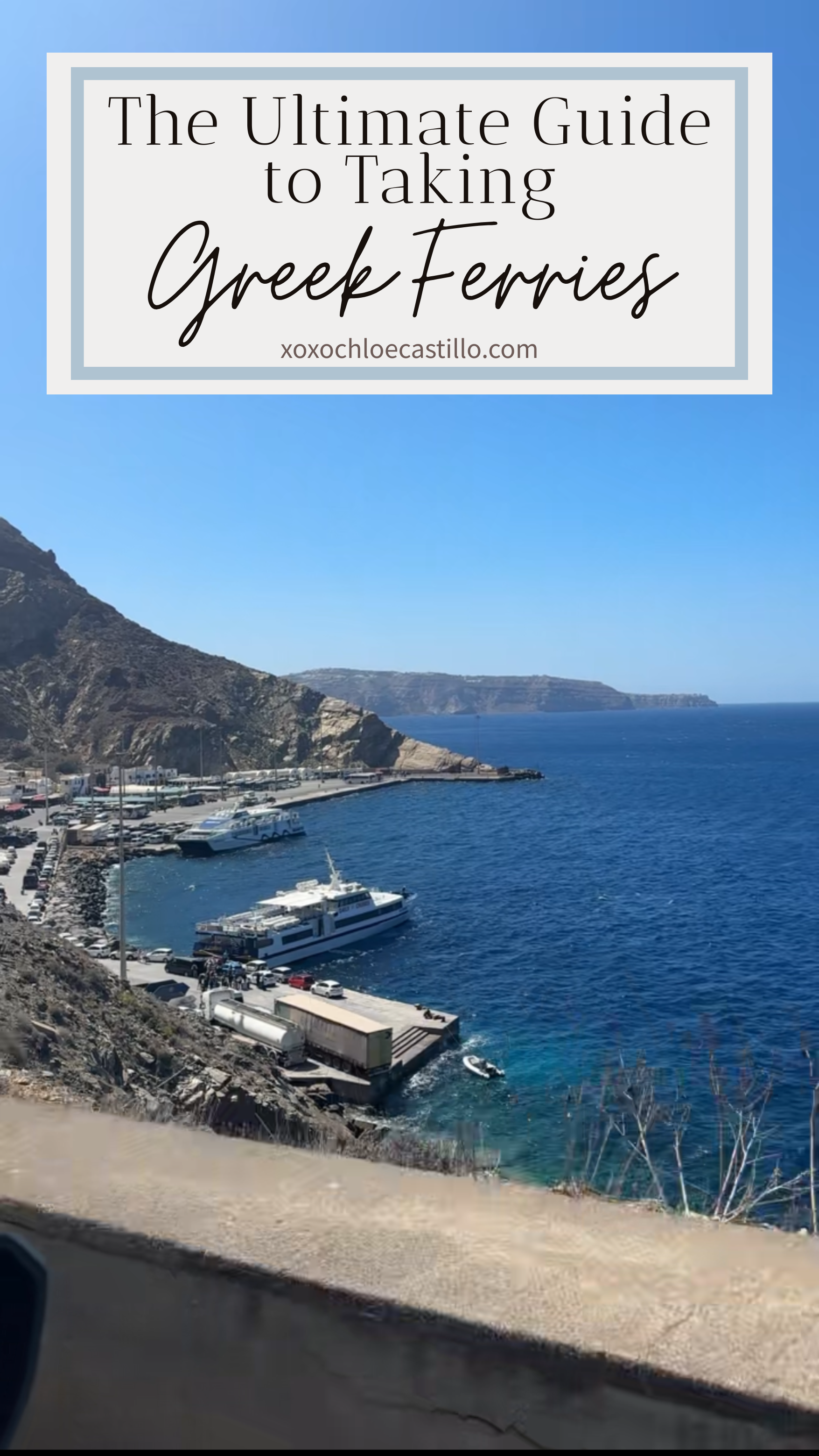


Fast ferries are significantly quicker, which makes them great for shorter island routes. However, they tend to be bumpier and less comfortable, especially in windy conditions.
Slower, larger ferries take more time but are generally more stable and spacious. If you are prone to motion sickness or just want a smoother ride, these are usually the better option.
As a general rule, ferries work best for routes that are around two to three hours or less. For longer distances, flying may be worth considering, especially when factoring in comfort and travel fatigue.
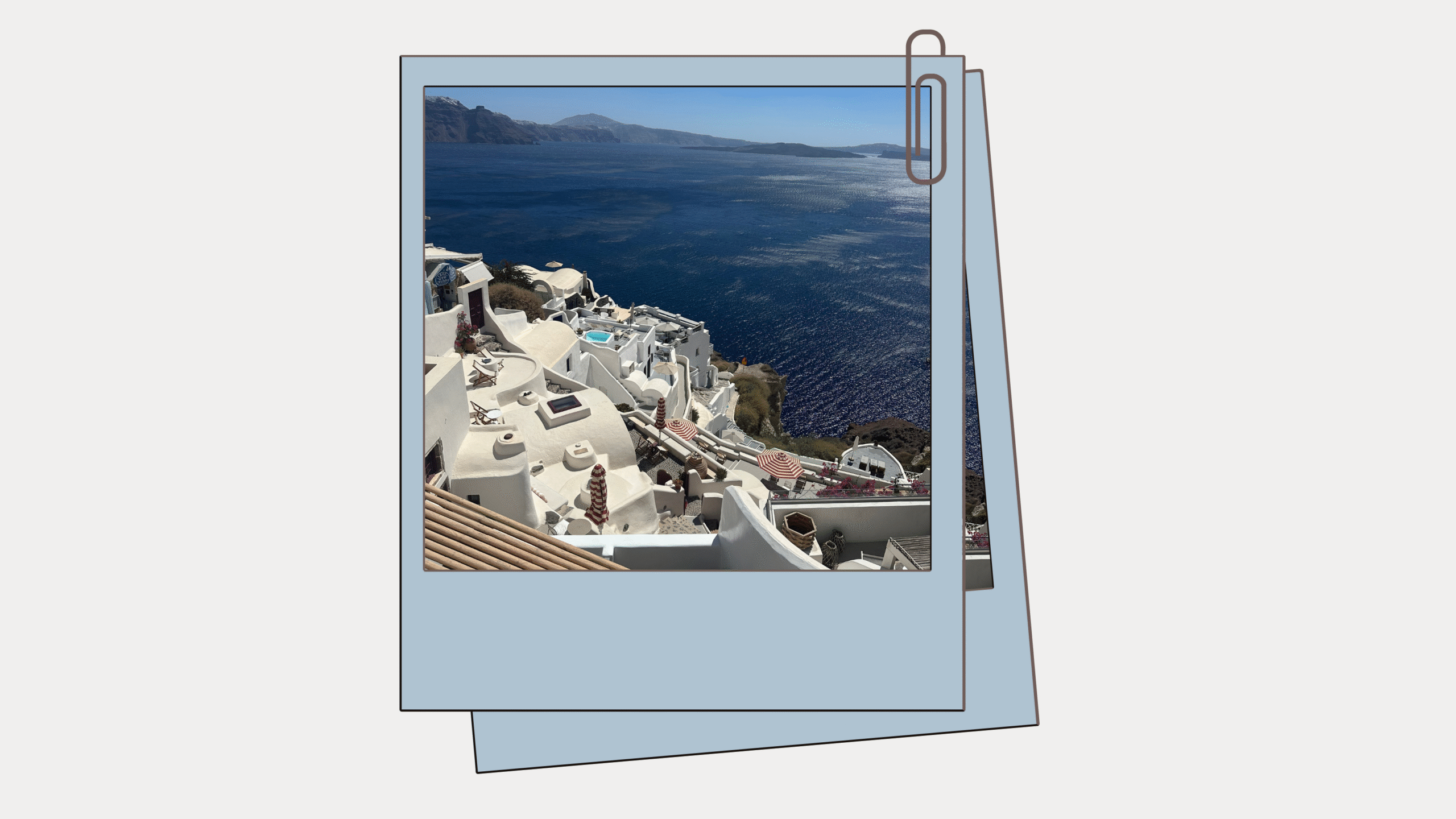


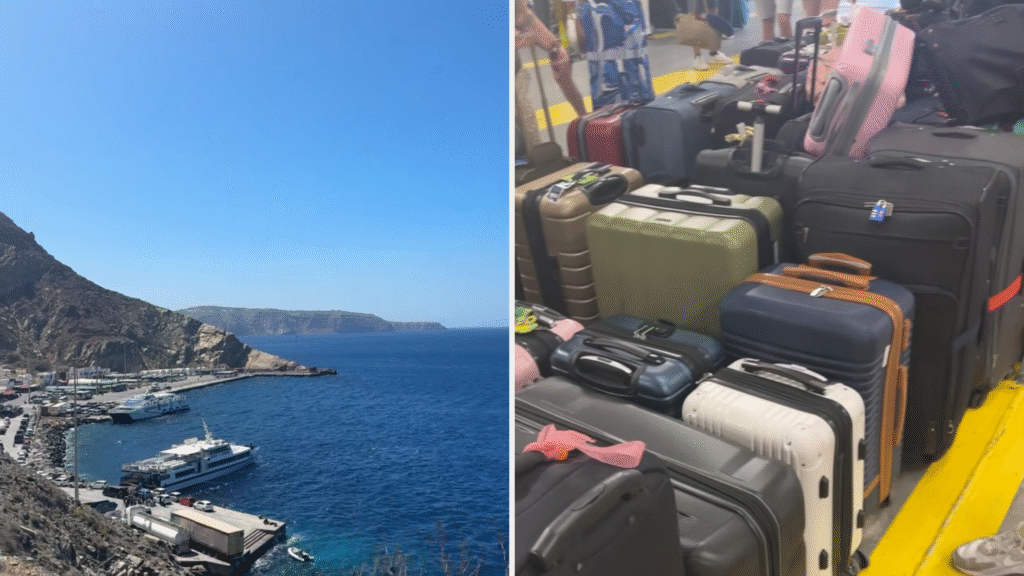
Boarding is usually organized but can feel chaotic at busy ports. Rental cars, taxis, and foot passengers are all moving at once, especially in popular destinations like Santorini.
Smaller islands like Milos and Naxos tend to have much calmer and more manageable ports, which makes the process feel easier overall.
Once on board, luggage is typically stored in a designated lower area, while smaller bags can be taken to your seat. Larger ferries often have cafés or bars, along with bathrooms and indoor seating areas.
Tickets are checked again before you reach your assigned seats, so keep them easily accessible.
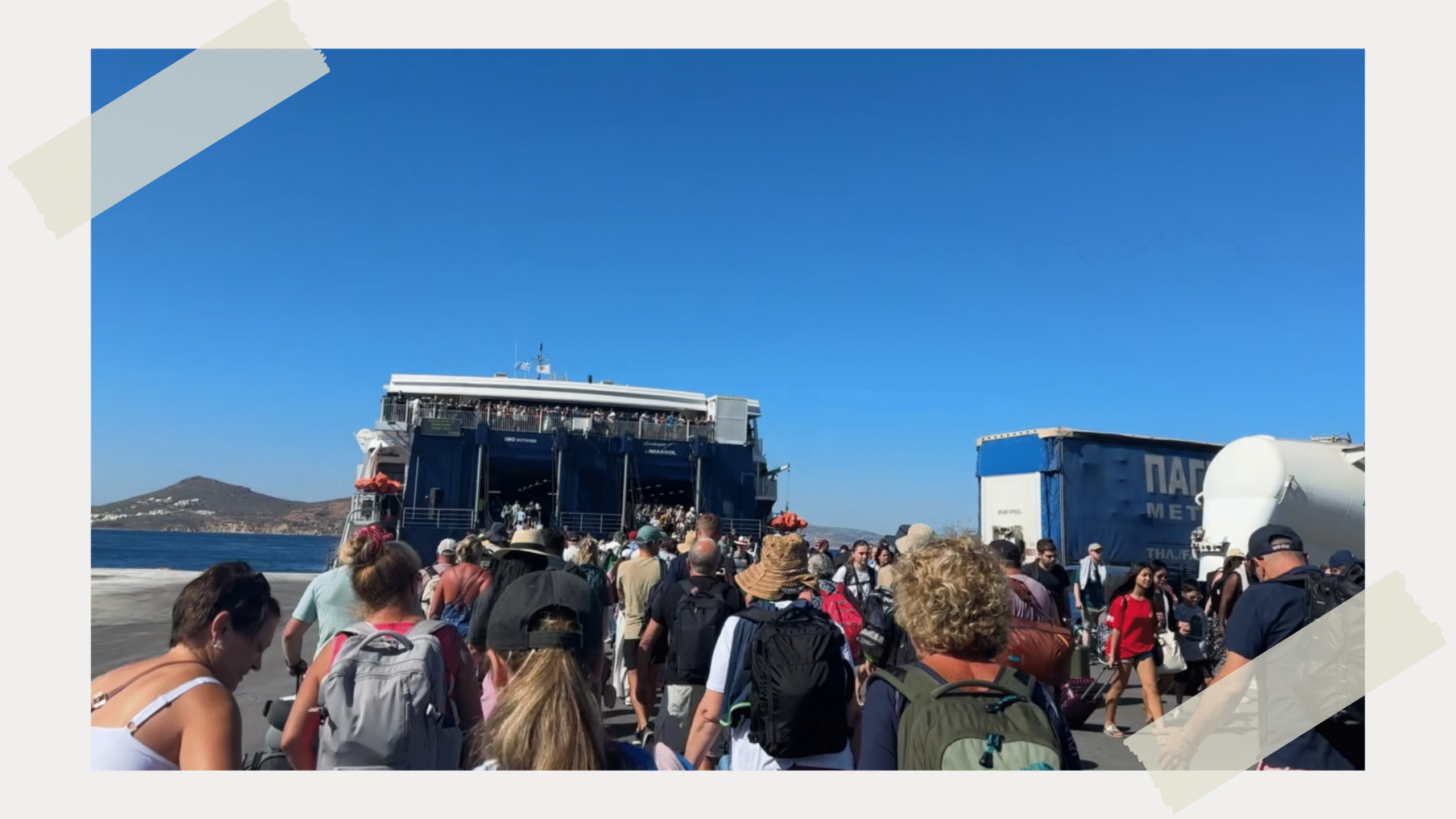


Seajets have a bit of a reputation for being a rougher ride, especially on windy days.
If you are sensitive to motion sickness or worried about feeling unwell, this is something to seriously consider before booking.
That said, our experience was completely fine, and we did not run into any issues. We were prepared for a bumpier ride and took the risk knowing what to expect.
Weather plays a huge role in ferry comfort. During windy conditions, even the larger ferries can feel noticeably more intense, so it is always good to stay flexible with your travel plans.


In many cases, ferries are convenient and cost effective, but they are not always the best option depending on your route.
A good rule of thumb is this:
– If the journey is short, a ferry is usually ideal.
– If it is long or requires multiple hours at sea, flying may be worth it.
– Flights between islands are often faster and more comfortable, but they can require connections through Athens and may include extra baggage fees.
– If you are trying to maximize comfort and minimize travel time, it is always worth comparing both options before booking.
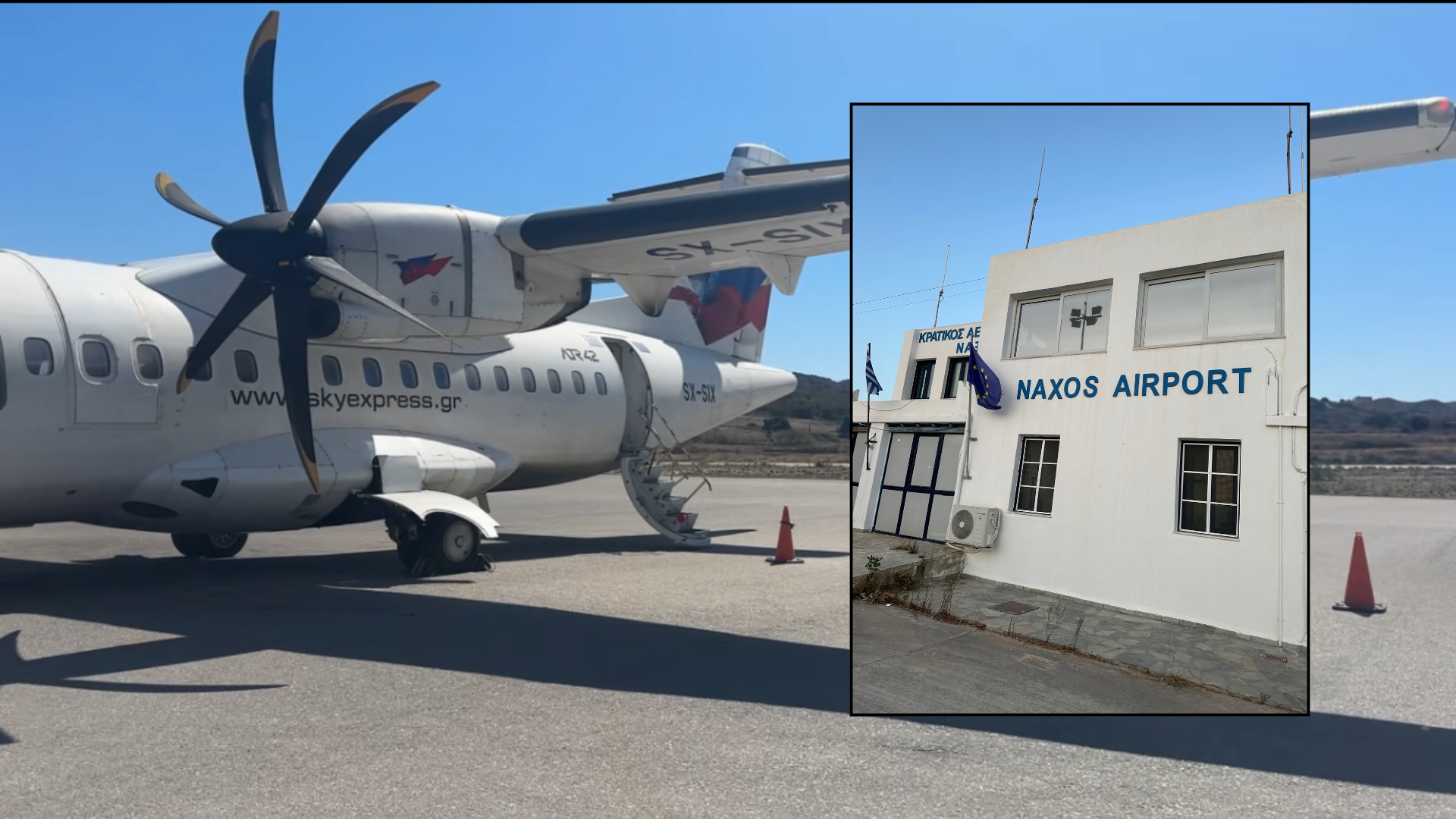
– Choose larger ferries if you want a smoother ride
– Be mindful of sea conditions, especially in windy months
– Keep essentials like water, snacks, and chargers in your carry-on
– Double check luggage rules if you are flying between islands as well
It is also important to note that ferries in the Greek islands can be unpredictable. Weather conditions change quickly, and this can lead to delays or even last-minute cancellations. Flexibility is key when planning island hops, and it helps to be prepared to adjust your schedule if needed.

Taking ferries in Greece is one of those travel experiences that is part logistical, part adventure. It is not always perfect, but it is often the most practical way to move between islands.
Once you understand how it all works, it becomes much easier to navigate and plan around.
And despite the occasional bumps along the way, there is something pretty special about watching one island disappear in the distance while another comes into view.